

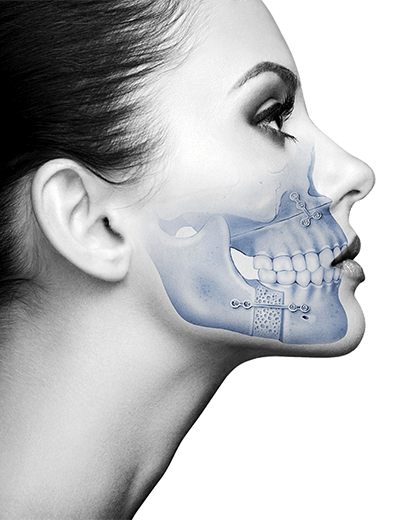
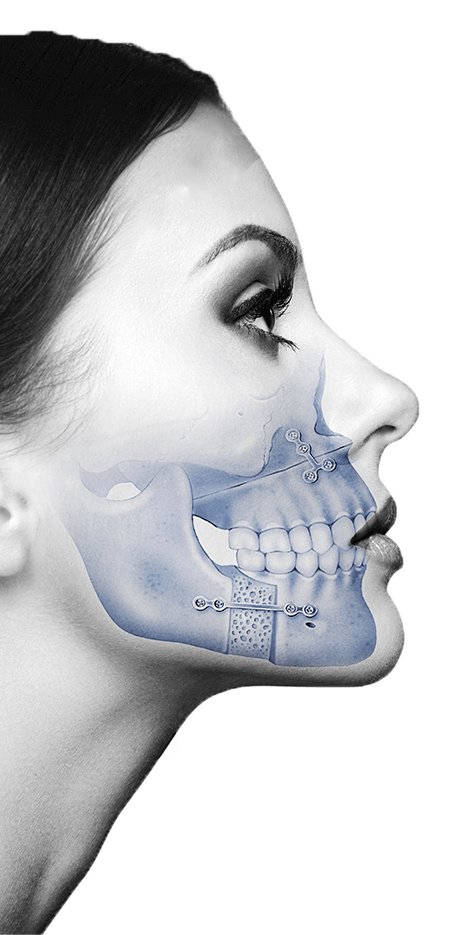
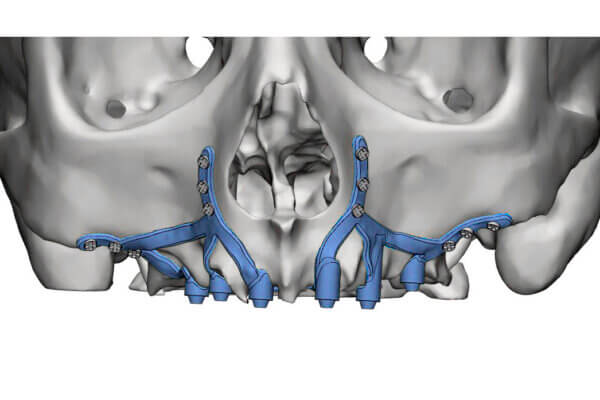
The choice between traditional implants and subperiosteal implants should always be based on an individualized diagnosis performed by a specialized maxillofacial surgeon. This table will help you understand the indications for both, so you can better understand why the specialist recommends one option or the other.
Relationship with the bone
Traditional implants: These are placed within the maxillary or mandibular bone through osseointegration.
Subperiosteal implants: These rest on the surface of the bone, below the gum line, without being inserted into it.
Bone volume requirement
Traditional implants: These require an adequate amount and density of bone to ensure stability.
Subperiosteal implants: These are indicated when there is severe or extreme bone atrophy.
Use of bone grafts
Traditional implants: These are frequently necessary in cases of advanced bone loss.
Subperiosteal implants: These generally do not require bone grafts.
Treatment Complexity
Traditional Implants: Treatment is phased, with waiting periods between procedures.
Subperiosteal Implants: Requires extensive pre-operative planning, but the surgery is more straightforward.
Overall Treatment Duration
Traditional Implants: Longer, especially if bone grafts are performed.
Subperiosteal Implants: Shorter in many complex cases.
Patient Profile
Traditional Implants: Patients with favorable bone conditions or bone regeneration potential.
Subperiosteal Implants: Patients with severe bone loss who are not candidates for bone grafts.
Surgical Planning
Traditional Implants: Based on radiographic studies and conventional or digital planning.
Subperiosteal Implants: Advanced digital planning and customized design.
Main Indications
Traditional Implants: Standard restorations and cases with sufficient bone.
Subperiosteal Implants: Complex oral rehabilitation cases in borderline situations.
If you think you need dental implants, schedule an appointment with our specialists to evaluate your case and determine which type of dental implants best suits your needs. Call us at +34 933933185 or email us at international@institutomaxilofacial.com
Related content:
Subperiosteal implants: the technique that can change the lives of patients with insufficient bone
Video: Subperiosteal implants