


Is jaw surgery painful?
During the surgery: no pain (general anesthesia)
First days: mild to moderate discomfort
Main symptom: facial swelling
Pain control: medication and postoperative care
Initial recovery: 2–3 weeks
Jaw surgery is usually not painful. There's a widespread misconception that, during jaw surgery, the maxillofacial surgeon will “break your jaw”. This misconception makes the whole procedure seem utterly invasive and is supported by thousands of photos of bruised and swollen people after undergoing orthognathic surgery, so it may be difficult to believe that very few patients report actual pain.
In reality, most patients describe mild to moderate discomfort, more related to swelling than to intense pain. Thanks to general anesthesia, advanced surgical techniques, and postoperative medication, pain is usually well controlled throughout the entire process.
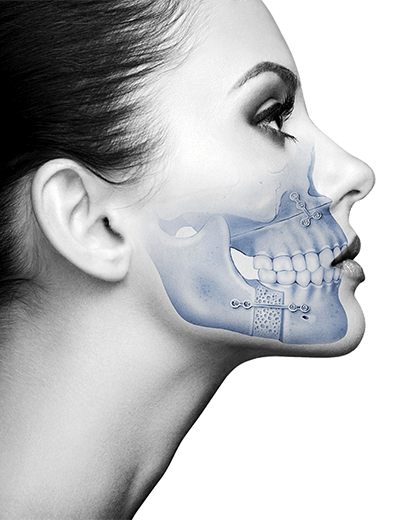
What is orthognathic surgery?
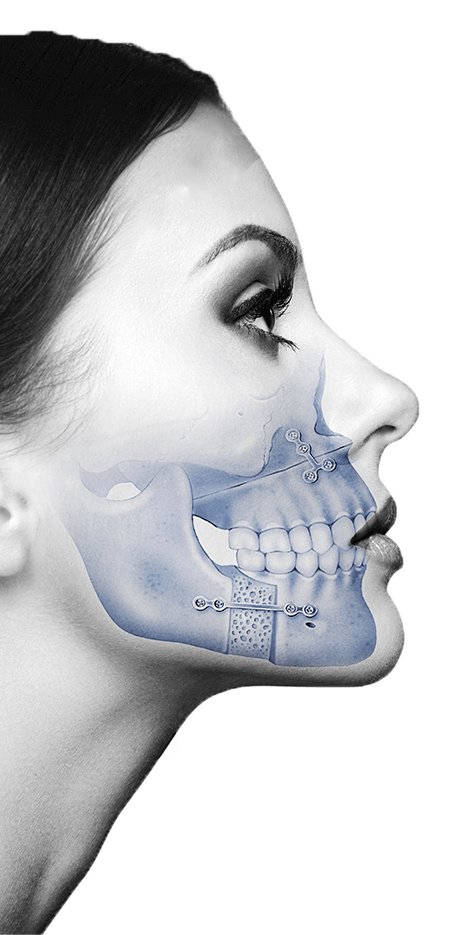
In orthognathic surgery, the maxillofacial surgeon uses small incisions, or osteotomies in the bone to reposition the upper jaw (maxilla) or the lower jaw (mandible). Your nerves and
muscles will resent the changes made during surgery, but you won’t actually experience any pain because you will be under anaesthetics, and by the time feeling returns to your face, most of the pain will be already gone.
Does orthognathic surgery hurt during the operation?
During the operation the patient does not feel any pain, since orthognathic surgery is performed under general anesthesia.
This means the patient remains completely asleep throughout the procedure. The anesthesia team continuously monitors parameters such as breathing, blood pressure, and anesthetic depth, ensuring both safety and comfort during the surgery.
The duration of the procedure depends on the type of correction performed — maxillary, mandibular, or bimaxillary surgery — but at no point does the patient feel pain during the operation.
What do patients feel after surgery
After the procedure it is normal to experience some temporary discomfort. However, the postoperative experience is usually easier than many patients imagine before surgery.
Facial swelling
Swelling is the most common symptom after orthognathic surgery. It typically increases during the first two or three days and then begins to decrease progressively.
Although the face may appear swollen for the first few weeks, this swelling is usually not accompanied by severe pain.
A feeling of pressure or tension
Some patients describe a sensation of pressure in the facial or jaw area, especially during the first few days. This sensation is part of the normal healing process of the tissues.
Mild discomfort controlled with medication
Postoperative pain is usually mild to moderate and can be effectively controlled with painkillers and anti-inflammatory medications prescribed by the medical team.
Many patients are surprised to discover that the postoperative period is less painful than they had imagined.
Regardless of this, we should keep in mind that pain is not just a physical sensation but an emotional one as well. Different patients have different pain threshold and there is no way of determining who has a high threshold and who has a low threshold. Also, it depends on the type of surgery you have (monomaxillary, bimaxillary, with or without complementary procedures, etc.)
 After many years of experience and feedback from our patients, we have noticed that the majority of them report pain to be less than expected, they rather express experiencing different levels of discomfort, with some people getting anxious because in the hours and days after the procedure, their nasal and sinus passages swell, hindering the air entrance. Also, there is a bit of pain when they yawn, sneeze and cough, or if they get jaw spasms; but surprisingly, most people report an enormous craving for solid food as their main discomfort! So for the most part, you shouldn’t experience much pain at all.
Why does orthognathic surgery usually hurt less than people think?
There are several factors that explain why pain after this surgery is usually limited.
First, the procedure is performed under general anesthesia with very precise anesthetic control. In addition, modern surgical techniques allow surgeons to work with great precision on the facial bones, minimizing trauma to surrounding tissues.
Three-dimensional digital planning has also significantly improved surgical precision. Thanks to this type of planning, the surgeon can study each case in advance and perform more controlled bone movements.
All of this helps reduce postoperative impact and allows for a more comfortable recovery for the patient.
How long does discomfort last after orthognathic surgery?
The recovery process usually follows a fairly predictable pattern.
First 2–3 days
This is the period when swelling reaches its peak. Discomfort may be slightly more noticeable but is controlled with medication.
First week
Swelling gradually begins to decrease and the patient starts to feel more comfortable.
2–3 weeks
Most patients can resume many of their normal daily activities, although residual swelling may take a little longer to disappear completely.
Every patient is different, but in general recovery is progressive and well tolerated.
Pain vs swelling: what really concerns patients
When people think about orthognathic surgery, many imagine that pain will be the main issue after the operation. However, clinical experience shows that facial swelling is usually the main concern during the first few days.
The feeling of a swollen face or tension in the tissues is completely normal and part of the natural healing process. As the weeks pass, the swelling decreases and the face gradually returns to its normal appearance.
Choosing the right surgeon
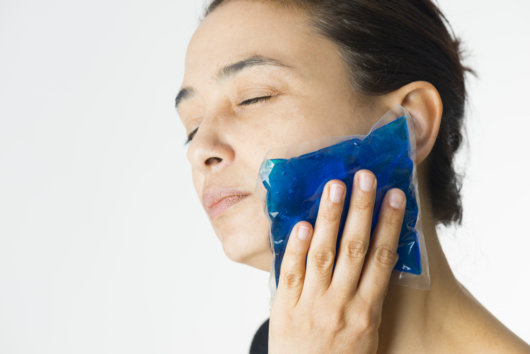
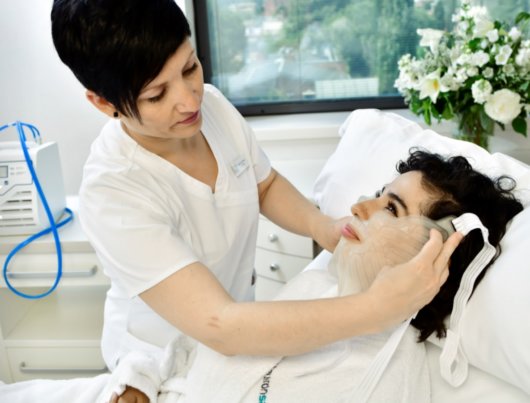
When choosing a surgeon,it is important to look for specialists who perform minimally invasive procedures. At the Maxillofacial Institute we are pioneers in minimally invasive orthognathic surgery techniques, specially developed with the aim of shortening surgery times, gain greater precision and reduce postoperative trauma, in addition to applying specific postoperative care, such as a cold mask, and lymphatic massages.
Bear in mind that all patients receive medication to reduce swelling and relieve pain, which in most cases is easily controlled with medication and rest. In general, patients can return to normal life within two to three weeks after their orthognathic surgery.
Frequently asked questions about pain in orthognathic surgery
Does orthognathic surgery hurt more than a wisdom tooth extraction?
In many cases, patients report that the postoperative period after orthognathic surgery is less painful than they expected, and sometimes comparable to that of a complex wisdom tooth extraction. The main difference is usually the facial swelling, which may be more noticeable after orthognathic surgery.
What medication is used to control pain?
After surgery, analgesics and anti-inflammatory medications are prescribed to effectively control discomfort. The medical team adapts the medication to each patient in order to ensure the most comfortable recovery possible.
When do the discomfort and symptoms completely disappear?
Discomfort usually decreases significantly during the first few weeks. However, the complete healing process of the tissues may take several months, particularly in terms of residual swelling.
Related content: